
Criminal Court Cases in Gregg County
Gregg County divides criminal case records by offense level. The 124th and 188th District Courts hear felony cases. The 307th District Court mainly handles family and juvenile work, so it is not the normal adult felony destination. County Courts at Law 1 and 2 hear Class A and Class B misdemeanors. Justice courts and city municipal courts keep fine-only matters within their own jurisdiction. A searcher who starts at the wrong level may find nothing even though a valid case exists.
The District Clerk is the custodian for district and felony files. The County Clerk keeps the county-court misdemeanor files. Each municipal or justice court maintains its own fine-only docket. The official district-court list helps identify the felony courts, while the county-linked judicial portal provides the public search route. Court calendars can show that a setting occurred, but the clerk's filed judgment is the stronger source for a final result.
Gregg County Felony Court Assignments
The two regular felony courts sit in the Gregg County Courthouse. The 124th District Court uses Suite 447 and can be reached at 903-236-1765. The 188th District Court uses Suite 408 and can be reached at 903-237-2588. Both courts may appear in a Gregg County case result, so the court number is part of the identity of the file. County Court at Law 1 is in Suite 416 at 903-236-8445. County Court at Law 2 is in Suite 303 at 903-234-3110.
The clerk page is a useful visual check before an office request. The Gregg County District Clerk source shows the office that supplies district case help and certified records.
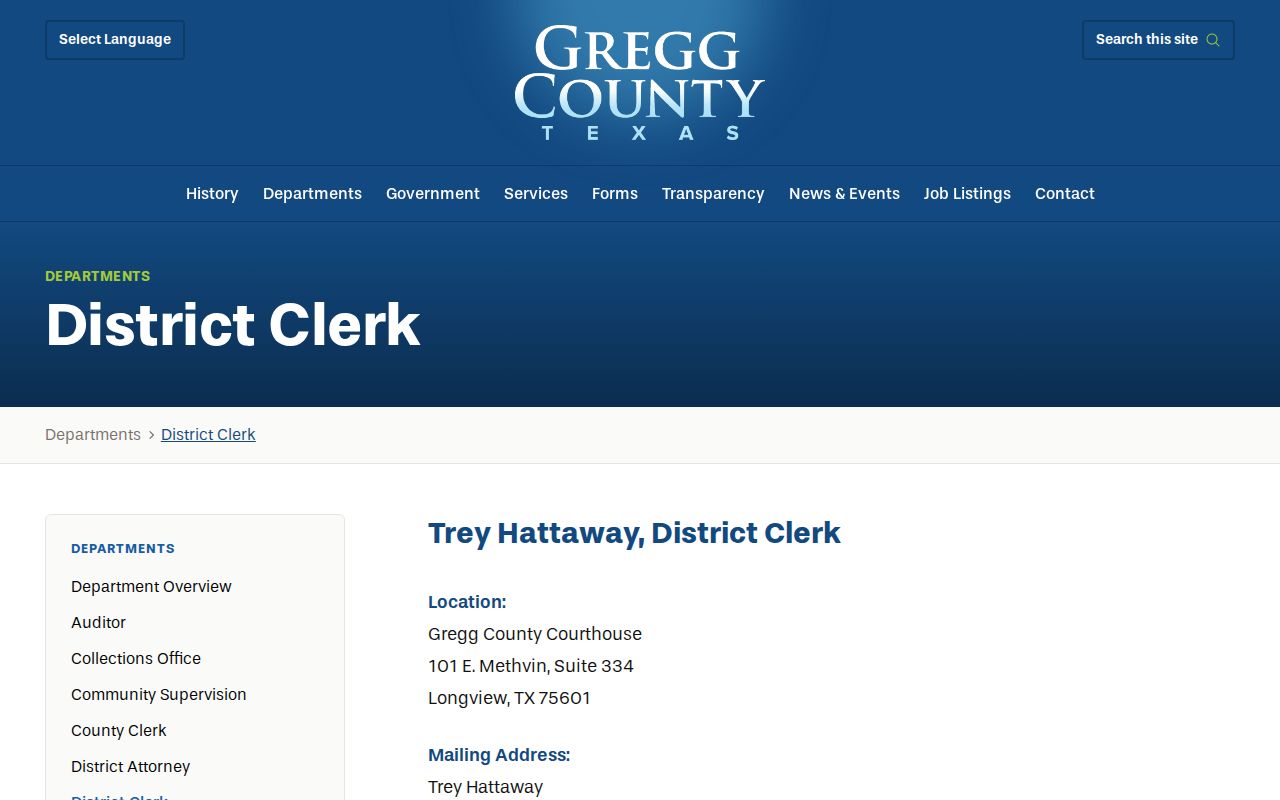
The image places the online Gregg County court case search beside the office channel readers need when an image, disposition, or certification is missing.
Gregg County Case Record Searches
The current county-linked search is the Gregg County Tyler judicial portal. The older Odyssey access page documents the separate criminal, calendar, jail, and bond locations but should not displace the current county link. Search by exact cause number when it is known. A defendant-name search is the next choice, but a name alone is not proof that the record belongs to the intended person. Portal controls can change, and the interactive application resisted automated review during research. The table therefore separates verified search choices from optional refiners that must be confirmed on the live form.
- Choose the criminal case location and identify whether the matter belongs in a district, county, justice, or municipal court.
- Enter the exact cause number. If it is unknown, use the defendant name and match spelling with care.
- Use any live date or court refiners to narrow common-name results, but do not assume an optional control is always present.
- Open the case summary and compare court, filing date, charge, status, events, and disposition.
- Give the cause number to the correct clerk when requesting a docket sheet, charging paper, judgment, or certified copy.
| Field or control | Type | Use | Notes |
|---|---|---|---|
| Location | Tile or menu | Required | Select criminal cases rather than calendar, jail, or bond records. |
| Case Number | Text | Alternative | Best choice when the full Gregg County cause number is known. |
| Last Name | Text | Alternative | Begin with the exact legal surname. |
| First Name | Text | Refiner | Helps separate similar names. |
| Date or Court | Date/menu if shown | Optional | Confirm these controls on the current portal before use. |
Gregg County Case Cause Numbers
Gregg County calendars use distinct cause-number patterns. County cases can show a year and sequence pattern, while district cases can use a numeric-letter form. Keep the full value, including letters and punctuation, because the cause number links a search result to the clerk's file. Docket PDFs also identify the court, judge, date, time, setting, offense abbreviation, custody indicator, counsel, prosecutor, bond information, reset count, and notes when those fields apply.
A calendar is not the final case file. Local entries such as arraignment, appearance docket, guilty plea, status hearing, felony pending, request for summons, or motion for psychological examination describe events or settings. They do not, by themselves, prove the final disposition. If a calendar lists an offense but omits its felony degree, read the indictment or information and final judgment. Texas Penal Code Chapter 12 places felony degrees in district court and Class A or B misdemeanors in the county courts at law, but enhancements can change the applicable range.
Note: Preserve every character in a Gregg County cause number because a missing letter can point the clerk to the wrong file.
What a Criminal Case File Contains
A Gregg County criminal case file is organized around one prosecution rather than one booking event. The most useful records are often the charging document, docket sheet, disposition, and judgment. A case may begin with one allegation and end with a different final charge. Reading only the first line of a portal result can therefore miss a reduction, dismissal, plea, trial finding, or later sentence.
| Case number and court | Identifies the cause and the Gregg County court that owns the file. |
|---|---|
| Charging document | An indictment commonly states a felony accusation; an information commonly charges a misdemeanor. |
| Docket entries | Chronological filings, motions, settings, pleas, and court actions. |
| Hearing dates | Past and scheduled events, which are not the same as an outcome. |
| Disposition and judgment | The recorded result and formal court order. |
| Sentence and conditions | Custody, fine, community supervision, restitution, or other terms when public. |
Some calendar views omit full dates of birth, victims, state and FBI identifiers, itemized financial data, and the full judgment. That absence does not mean the filed document lacks every detail. Ask the custodian for the specific public record instead of asking the clerk to create a summary.
Gregg County Cases on re:SearchTX
re:SearchTX is Texas's statewide document-access system. It requires registration, and access or document charges can depend on the item. Texas appellate matters use the separate TAMES Case Search. Neither service should be treated as a complete store of every Gregg County trial-level criminal file. The local clerk and current Gregg County portal remain the practical first sources.
The official statewide portal sign-in screen shows why the service is a separate access layer.
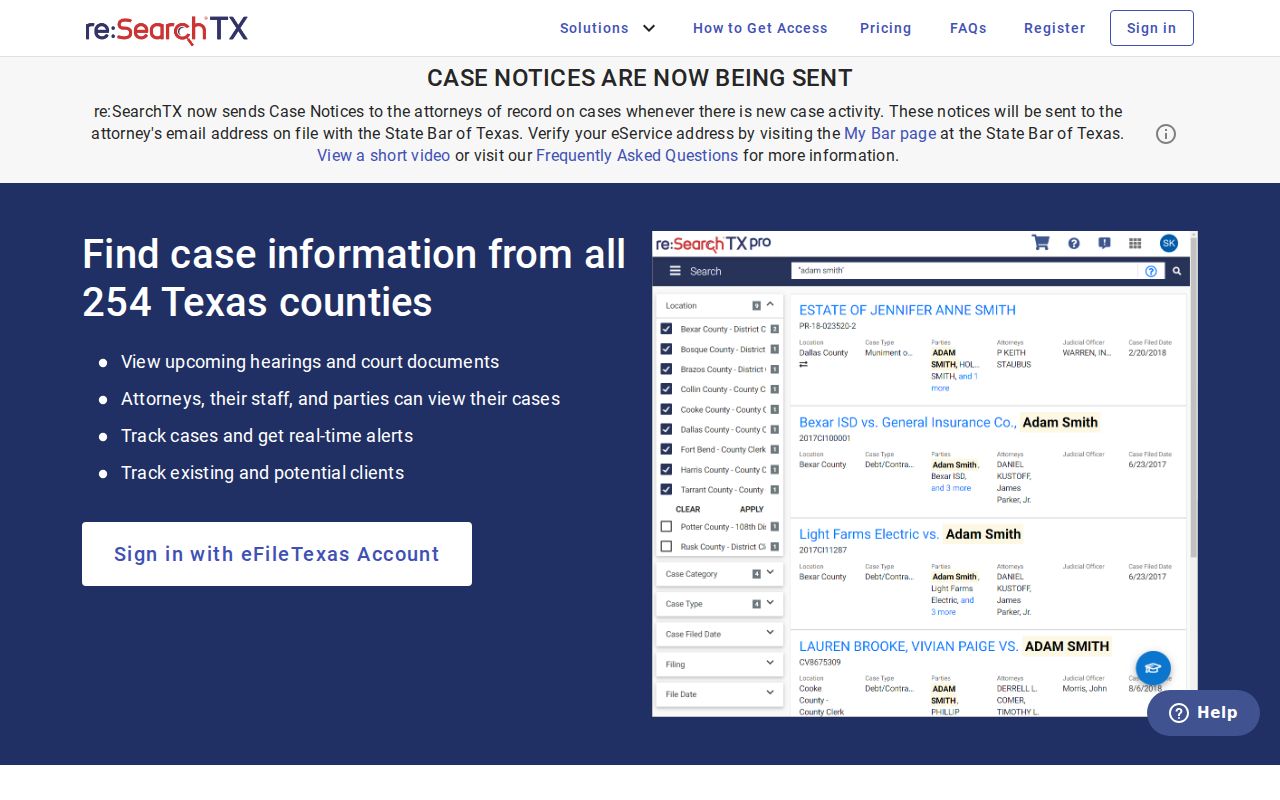
The pictured re:SearchTX entry point complements, rather than replaces, a direct Gregg County criminal case lookup and clerk request.
Note: A re:SearchTX result should be checked against the Gregg County clerk file when a trial-level document or outcome matters.
Criminal Case Stages in Gregg County
A filed case begins after the arresting event and prosecutor's charging choice. A felony usually proceeds through a grand-jury indictment, while a misdemeanor may proceed by information. Arraignment addresses the accusation and plea. Pretrial work can include discovery, motions, competency questions, bond issues, and status settings. The case can end through dismissal, a negotiated plea, or trial. A judgment records the result, and sentencing states the punishment or supervision terms.
Case flow: Charges Filed › Arraignment › Pretrial › Plea or Trial › Disposition › Sentencing
Gregg County docket labels should be read in that sequence. A status hearing shows movement, not guilt. A guilty-plea setting is stronger evidence of the planned event, but the signed judgment remains the record to seek when the final result matters. For the earlier custody layer, the county's arrest search channels explain why a booking charge can differ from what the prosecutor files.
Gregg County Federal Case Boundaries
Federal criminal cases from Gregg County belong to the Tyler Division of the U.S. District Court for the Eastern District of Texas. They do not become Gregg County district-court files merely because the conduct occurred locally. The federal clerk is at the William M. Steger Federal Building and U.S. Courthouse, 211 W. Ferguson Street, Room 106, Tyler, with a 903-590-1000 help desk on weekdays from 8 a.m. to 5 p.m.
PACER supplies federal dockets and documents after registration. Published pricing is ten cents per page, usually capped at three dollars for a case-specific document, while quarterly charges of thirty dollars or less are waived. Name searches and some reports do not receive the document cap. The Eastern District of Texas site gives local federal court notices and access details.
A federal docket is also distinct from a person's identity history or custody record. The FBI provides an electronic Identity History Summary request for one's own fingerprint-supported history, with process details on the FBI identity-history page. The Bureau of Prisons inmate locator covers federal custody rather than Gregg County jail or TDCJ custody.
The official PACER source shows the separate federal search route.
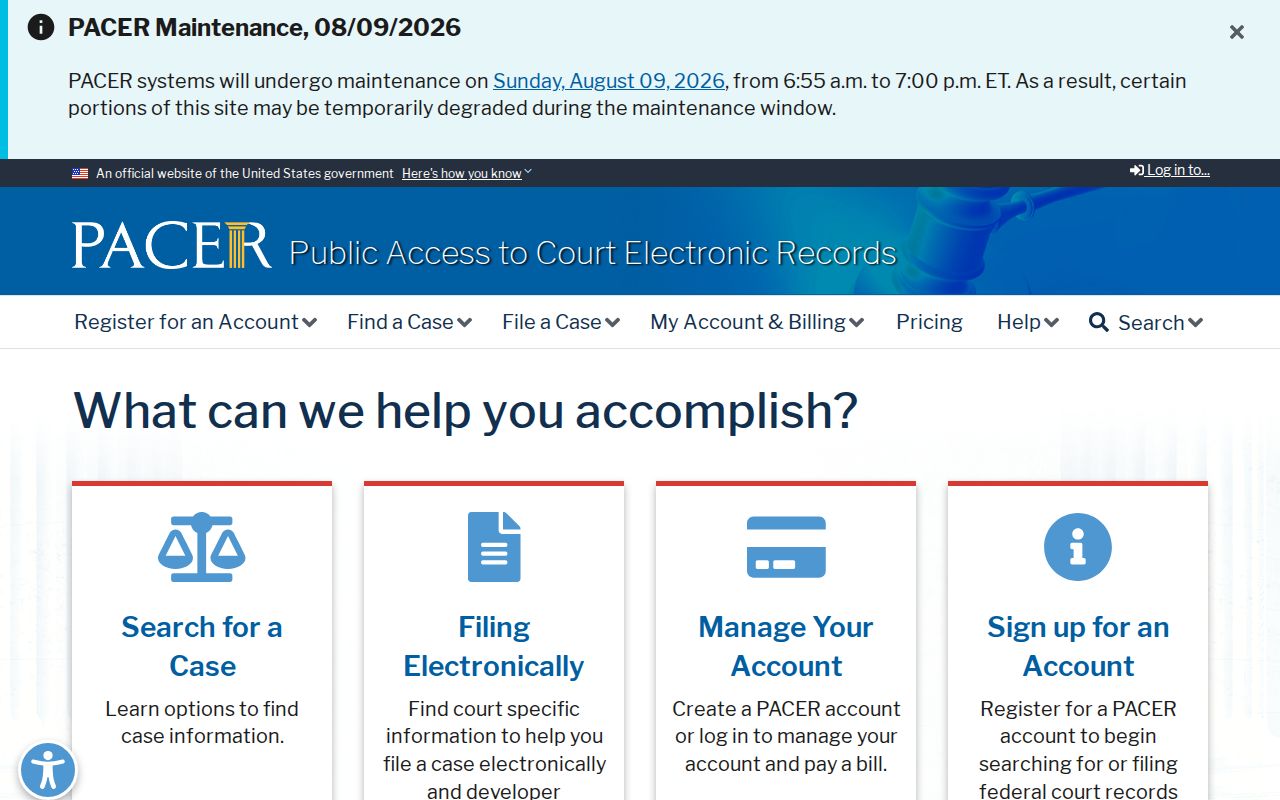
This federal layer should be checked only when the case belongs in U.S. District Court, not as a substitute for Gregg County clerk records.
Gregg County Court Record Copies
When the portal will not load or lacks an image, contact the correct clerk. District Clerk Trey Hattaway's office is in Suite 334 of the courthouse at 101 E. Methvin Street, Longview, and the direct number is 903-237-2663. Public hours are weekdays from 8 a.m. to noon and 1 p.m. to 5 p.m. The lunch closure matters for an in-person visit. Mail for the District Clerk goes to P.O. Box 711, Longview, TX 75606.
County Clerk benchmarks list paper copies at one dollar per page. Electronic copies up to ten pages are one dollar, then ten cents per page. Certification is five dollars per document plus page costs, and a certified name search is five dollars. Confirm that the benchmark applies to the desired court and record before ordering. Provide the cause number, court, document name, and preferred format so the clerk can quote the right service.
District Clerk
101 E. Methvin St., Suite 334
Longview, TX 75601
903-237-2663
Weekdays, 8 a.m.-noon and 1-5 p.m.
County Clerk
101 E. Methvin St., Suite 200
Longview, TX 75601
Ask the county main line to route misdemeanor-record questions.
Access Rules for Case Records
Texas law favors access to existing public information, but court files follow judicial-record rules and specific confidentiality laws. Government Code section 552.021 supplies the general public-information rule for government records. Texas Rules of Judicial Administration Rule 12 distinguishes administrative judicial records from a filed case record. Ask the clerk of the case for the filed court documents rather than treating the request as an ordinary agency question.
Juvenile material, protected victim or minor identifiers, Social Security and financial-account data, sealed files, nondisclosed criminal history, and some active law-enforcement information may be withheld or redacted. Online views may show less than the paper file. A missing portal result can also mean the matter is municipal, justice-court, federal, newly filed, or indexed under a different spelling. It does not prove that no case exists.
Use the originating court: Felony records go to the District Clerk, Class A and B misdemeanor files to the County Clerk, and fine-only files to the issuing municipal or justice court.
Note: A public calendar proves a setting was listed, while the signed judgment is the better source for the final outcome.